Why GLP-1 Side Effects Hit 1–3 Days After Your Shot
If you feel fine the night of your shot and then get hit with nausea or a wiped-out feeling a day or two later, you're not imagining the delay. Injectable semaglutide and tirzepatide are absorbed slowly, so the amount of drug in your blood doesn't peak until roughly one to three days after the injection. For a lot of people, that's when side effects are worst.
I noticed this pattern long before I understood it. On my first month of Zepbound at 2.5 mg, Sunday shots meant Tuesday was the rough day: queasy after lunch, no interest in dinner.
Here's what's going on, and what I've found useful to track.
Your shot doesn't peak when you inject it
When you inject a weekly GLP-1, the drug doesn't go straight into your bloodstream. It sits in the tissue under your skin and is absorbed gradually. The prescribing information for each drug lists how long that takes to reach peak concentration:
- Semaglutide (Wegovy, Ozempic): peak levels about 1 to 3 days after the injection, with a half-life of about a week. (Wegovy prescribing information)
- Tirzepatide (Zepbound, Mounjaro): peak levels between about 8 and 72 hours after the injection, with a half-life of about 5 days. (Zepbound prescribing information)
So if you inject on Sunday morning, your level keeps climbing through Monday and often into Tuesday, then drifts down for the rest of the week until your next shot.
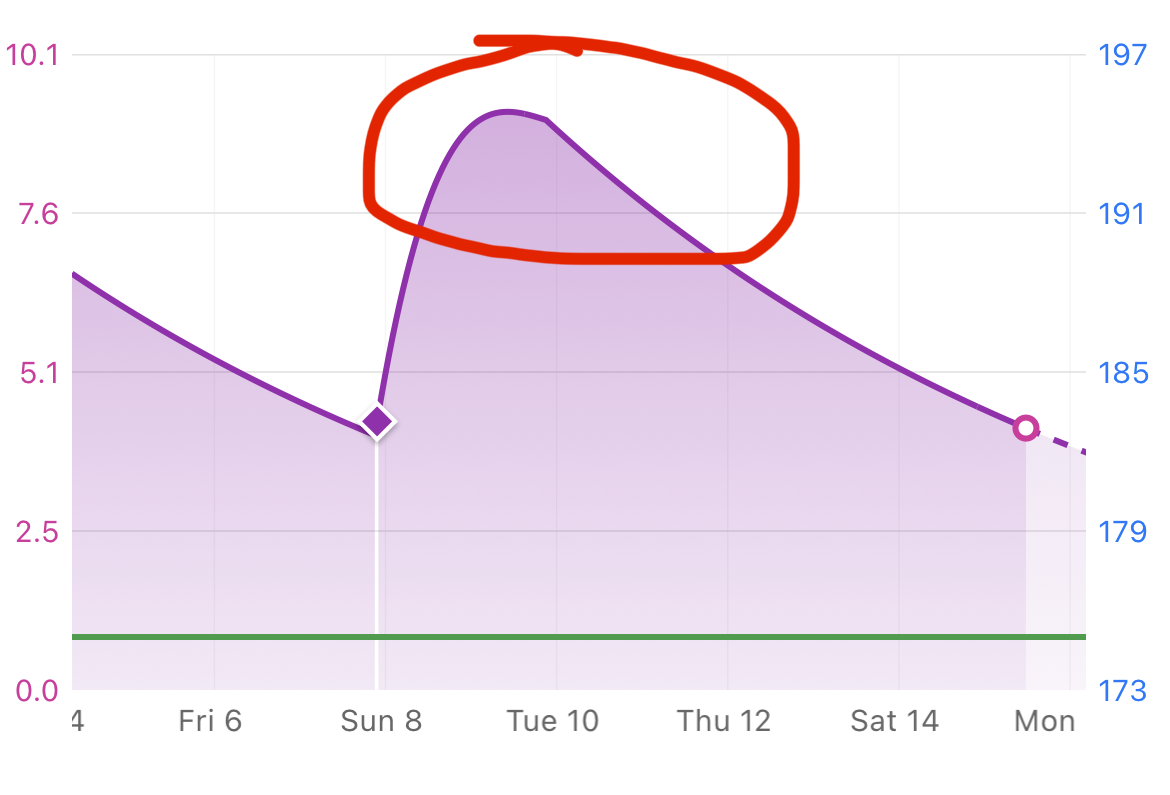
What that looks like over a few months
This is a projected level chart from Pokii. Each spike is one weekly shot, and each color is a different dose as the dose steps up:
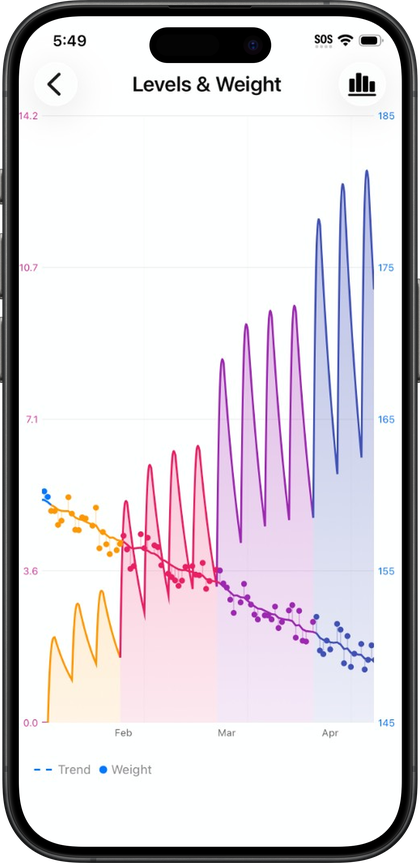
A few things stand out once you see it drawn out:
- Every week has a peak and a valley. The peak lands a day or more after the shot, not on shot day.
- Each dose increase raises the whole curve. The first few weeks at a new dose are when your body meets a level it hasn't seen before.
- Levels build over the first few weeks. Because the half-life is close to a week, some of last week's dose is still around when the next one goes in. Both labels say it takes about four to five weeks of weekly dosing to reach a steady pattern.
This is a model built from published pharmacokinetic data, not a blood test. Your actual levels depend on your body, where you inject, and other factors. It's still a useful picture of the general shape.
Why the timing matters for side effects
GLP-1 medications slow down how quickly your stomach empties and act on the parts of the brain that handle appetite and nausea. Those effects are a big reason the drugs work, and they're also why nausea is the most common side effect. In the STEP 1 trial of semaglutide 2.4 mg, 44% of participants reported nausea versus 17% on placebo (NEJM, 2021). In SURMOUNT-1, nausea was reported by about 25 to 33% of people on tirzepatide, depending on dose, versus 9.5% on placebo (NEJM, 2022).
The trials don't report side effects by day of the week, so there's no study that proves nausea tracks the peak for everyone. But the pattern is common: a delay after the shot, a rough day or two, then easing as the week goes on. It also helps explain two other things many people notice:
- Side effects are usually worst right after a dose increase. In both trials, most stomach-related side effects happened while the dose was being stepped up, and became less common once people stayed on a dose. Mine did get worse as I stepped up, just only slightly.
- The first weeks on a new dose are usually the hardest. Zepbound's label notes that the slowing of stomach emptying is largest after the first dose and lessens over time.
My own experience matches that, with one surprise. My side effects got a little worse with each step up, but only slightly, and they eased after I'd been on a dose for a few weeks. When I got to maintenance, I stopped for long enough that the medication had completely left my body, then started again at 7.5 mg. Those first weeks were much rougher than the weeks I'd spent holding at 7.5 mg before. Same dose, very different experience. The difference was that my body had gotten used to the drug the first time, and after the break it hadn't.
That's one person's experience, not a study, and I'd treat it as a reason to be careful rather than a rule. How to restart after a break, and at what dose, is a question for your prescriber.
What I track, and why
Once I knew there was a pattern, I wanted to see my own version of it instead of guessing. These are the things worth writing down each day, especially in the first few weeks after a dose change:
- Shot day, time, and dose. Everything else lines up against this.
- Nausea and other side effects, with a rough severity. Even "mild, moderate, bad" is enough. Quiet days matter too, because they show where the pattern ends.
- Appetite. Many people notice appetite is lowest around the peak and creeps back near the end of the week.
- Meals and water on rough days. Big or high-fat meals, eating fast, and not drinking enough are commonly mentioned triggers. A note like "big dinner, nausea 2 hours later" is useful.
- Weight, a few times a week. Not to judge the week, but so you can see the trend alongside everything else.
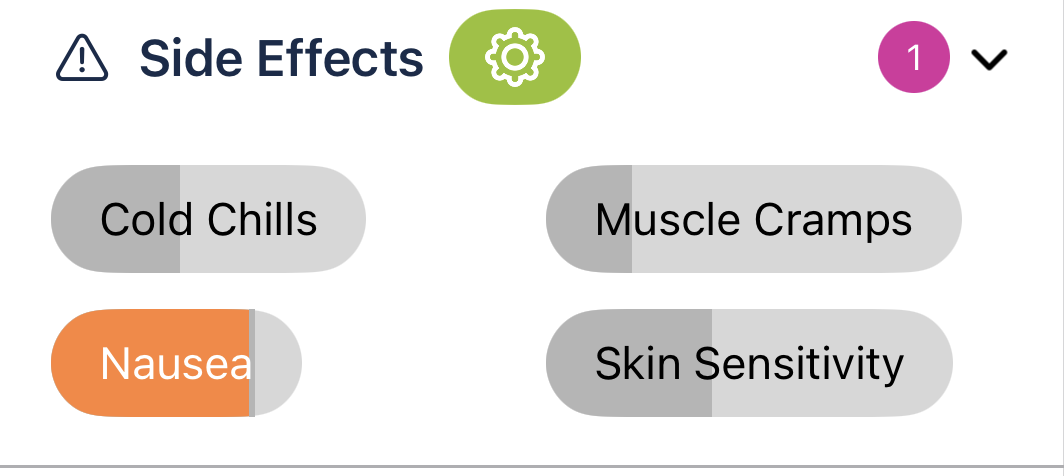
After a few weeks, you can look back and see whether your rough days really do land on day one, two, or three, and whether they get milder at the same dose. That's much more useful at a follow-up appointment than "the first couple of weeks were kind of rough."
Knowing my pattern changed one thing for me: when I take my shot. I started on Thursdays for no good reason except that's the day my first pens showed up. That put my worst days right over the weekend, and I felt terrible for it. Once I understood that the rough stretch lands a day or two after the shot, I moved my shot day to Sunday. Now I know Tuesday is going to be the hard day, I plan around it, and by the end of the week I feel good again going into the weekend.
You could just as easily flip it. If your weekends are when you have the most support, or the most room to rest, you might choose a shot day that puts the rough days there instead. There's no right answer. The point is to choose the day on purpose, based on your own pattern, instead of taking whichever day happened to be first.
If you want to change your shot day, check with your prescriber first. The labels allow it, but they set a minimum number of days between two doses, and that minimum is different for different medications.
When it's more than normal side effects
Nausea that comes and goes in a predictable pattern is common. Some things are not, and both labels say to contact your healthcare provider if you have:
- Nausea, vomiting, or diarrhea that doesn't let up, or that keeps you from keeping fluids down
- Signs of dehydration, like dizziness, very dark urine, or urinating much less than usual
- Severe stomach pain that won't go away, with or without vomiting, especially if it spreads to your back. This can be a sign of pancreatitis and needs prompt medical care.
Changes to your dose or schedule are a conversation for your prescriber, not something to work out from a chart.
The short version
Weekly GLP-1 shots peak a day or more after you inject them, not on shot day. If your rough days land one to three days after your shot, especially in the first weeks after a dose increase, that timing fits how these drugs are absorbed. Tracking your shots and symptoms for a few weeks is the easiest way to see your own pattern and bring something concrete to your next appointment.
I built Pokii to do exactly that: it logs shots, side effects, appetite, and weight on one timeline and draws the projected level curve so you can see where you are in the week.
This article is for general information and isn't medical advice. Talk to your prescriber about dosing, side effects, and changes to your treatment.